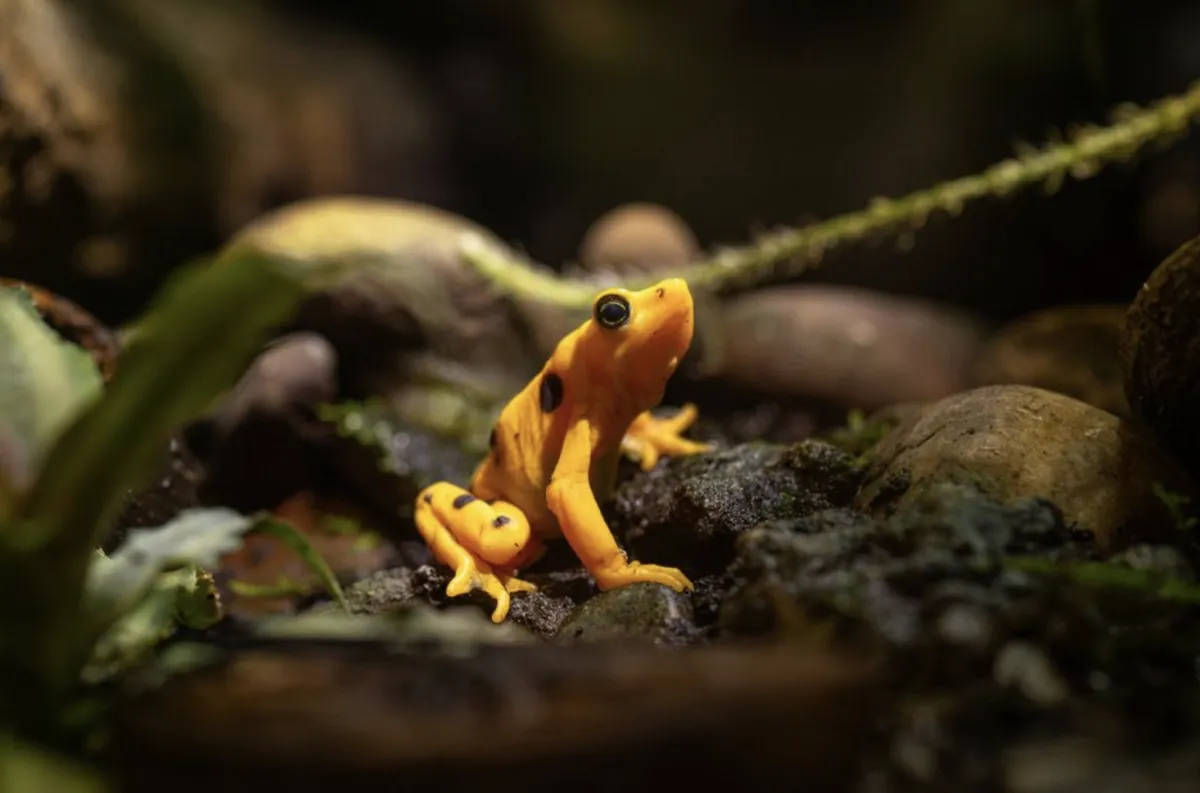
New Luck Gives the Panamanian Golden Frog A Step Toward the Wild
The Fort Worth Zoo supports a groundbreaking study for this critically endangered species
Information courtesy of Fort Worth Zoo
Photo credit courtesy: Fort Worth Zoo
FORT WORTH, Texas — Thought to be extinct in the wild, the Panamanian golden frog’s luck is moving in the right direction as important achievements in conservation work bring the species one step closer to a wild release. Today, on National Golden Frog Day, the Fort Worth Zoo, alongside our partners, is proud to share a conservation milestone for the critically endangered Panamanian golden frog as the species returns to a managed outdoor habitat for the first time in two decades.

Conservation teams at Panama’sEl Valle Amphibian Conservation Center(EVACC) Foundation, along with support from Fort Worth Zoo and other zoo partners, are beginning a new study on golden frogs in managed care. A portion of the managed population of golden frogs at the EVACC facility has been moved from their indoor habitats to new outdoor, open-air holdings. This move returns golden frogs outdoors in this semi-natural environment that opens the door for groundbreaking research on the toad’s growth and survival in its natural habitat – critical insights that will help pave the way for an eventual wild release.
“This milestone brings one of Panama’s national treasures one step closer to living in the wild again, marking an important step forward for this beloved species,” says Vicky Poole, associate curator of ectotherms at the Fort Worth Zoo. “It is especially meaningful to me and my colleagues who have dedicated their careers to the conservation of this remarkable frog.”
Poole, in addition to her role at the Fort Worth Zoo, is a founding member of Project Golden Frog and has dedicated 30 years to the conservation of the Panamanian golden frog. Project Golden Frog is a collaborative conservation effort among U.S. zoos and aquariums focused on protecting the species. As the project’s coordinator, Poole oversees the managed golden frog population at facilities across North America, coordinates related research programs in the United States and Canada, and advises on golden frog husbandry and conservation programs in Panama.
The Panamanian golden frog, or “Rana dorada” in Spanish, with its striking yellow-and-black pattern, is native to the cloud forests of Panama and serves as the national animal and a symbol of luck and good fortune. For centuries, pottery and gold replicas of the golden frog, called “huacas,” have been made and are believed to bring good luck. Despite the frog’s fame, few Panamanians have seen a living golden frog firsthand or understand the species’ history. The species’ plight in the wild has been anything but lucky, as it has battled for survival for decades due to threats such as the pathogenic fungus that causes chytridiomycosis, habitat loss due to deforestation, invasive species, water pollution and more.
With this momentous transition, conservationists can now research and monitor growth rates between the population of frogs that are housed in the controlled indoor habitat and the new open-air habitats. This groundbreaking study will bring insight that will be critical in preparing to release this iconic frog back into the wild. This project highlights the importance of collaboration in conservation, as these partners work together to bring this symbol of luck back to the wild in Panama.
